Introduction
Slow cooking has become increasingly popular among home cooks looking for convenient ways to prepare meals without spending hours in the kitchen. The appeal is straightforward: you add ingredients in the morning, set the cooking time, and come home to a fully prepared dinner. For households that want to cook larger portions or prepare meals for gatherings, understanding what a large-capacity slow cooker offers can significantly impact meal planning and preparation.
The 8-quart programmable slow cooker represents a substantial investment in your kitchen. It’s designed for people whose cooking needs extend beyond everyday family meals—whether that’s feeding a larger household, preparing for entertaining, or someone who enjoys batch cooking and freezing meals for later use. This guide explores what makes this type of appliance useful, how to integrate it into your cooking routine, and what factors matter when considering whether it’s right for your situation.
Understanding Slow Cooker Technology and Benefits
Before diving into specific features, it’s helpful to understand what slow cooking accomplishes. Slow cookers work by heating food gradually at low temperatures—typically between 180 and 280 degrees Fahrenheit—over an extended period. This gentle approach breaks down tough cuts of meat, melds flavors together, and creates tender results that often taste like they’ve been simmered for hours.
The science behind this method is well-established. Collagen in connective tissues converts to gelatin over time, which is why inexpensive cuts of meat that would be tough when cooked quickly become tender and flavorful in a slow cooker. The long cooking time also allows flavors to develop and intensify naturally, without requiring constant attention or adjustment.
For busy households, slow cookers solve a practical problem. Rather than coming home exhausted and facing the prospect of cooking dinner from scratch, you can have a complete meal ready. There’s also minimal active cooking time required—often just 10 to 15 minutes to prep and layer ingredients in the morning.
Key Features of an 8-Quart Programmable Slow Cooker
Capacity and Portability
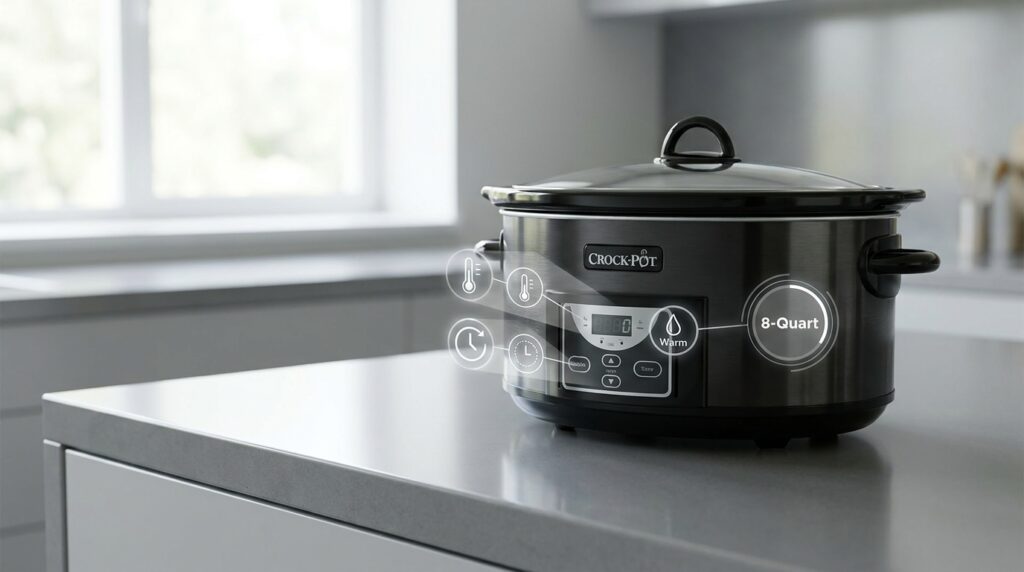
An 8-quart capacity represents a significant step up from standard slow cookers. For context, typical household models range from 4 to 6 quarts. This larger size allows you to cook for eight to twelve people comfortably, or to prepare multiple meals worth of food at once.
The practical implications of this size matter. If you’re cooking for a family of six or hosting dinner for guests, you’re not constrained by the traditional “should I make two batches?” dilemma. The larger footprint does mean it takes up more counter or storage space, which is worth considering in a kitchen with limited real estate.
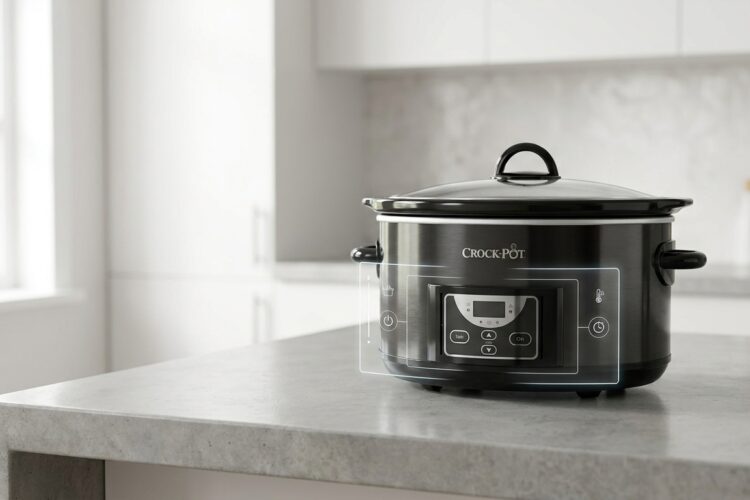
Despite the size, most modern slow cookers are designed with some portability in mind. The stainless steel exterior not only looks more finished than older ceramic models, but it’s also more durable and easier to clean. The black stainless steel finish tends to show fingerprints less than polished stainless steel, which practical cooks appreciate.
Programmable Timer and Temperature Control
The programmable feature distinguishes this from basic slow cookers. Rather than setting a dial and hoping you’re home when cooking finishes, you can set specific cooking times. Most programmable models offer preset cooking durations or allow you to enter custom times.
This functionality changes the practical application significantly. You’re not limited to recipes that require exactly eight hours on low or four hours on high. You can customize the cooking time to match your schedule—whether that’s a seven-hour cooking window or five hours.
Temperature control typically allows selection between low and high settings. Low settings generally run around 190 degrees, while high settings run closer to 280 degrees. The choice between these affects both cooking time and the finished texture of your food. Low and slow is ideal for tougher cuts of meat and dishes that benefit from extended cooking. High heat works when you’re in more of a time crunch.
Auto-Warm Setting
The auto-warm feature addresses a common slow cooker limitation. Once your food finishes cooking, the appliance switches to a warming temperature—usually around 160 to 170 degrees—rather than turning off. This means your food stays hot and ready to serve even if you’re delayed getting home or if you’re eating at staggered times.
This feature is particularly valuable for entertaining. Instead of your food sitting at room temperature for an hour while guests arrive and settle in, it remains at a safe, appetizing temperature. It’s also useful for families where people eat dinner at different times.
Digital Display and Control Panel
Modern programmable slow cookers feature digital displays that show cooking time remaining, the current setting, and sometimes current internal temperature if the model includes a temperature sensor. The control panel is typically intuitive enough that you’re not consulting the manual every time you use it.
The display serves practical purposes beyond convenience. You can verify at a glance that you actually set the timer when you left the house that morning. If you need to adjust settings mid-cooking, you can see exactly what you’re changing.
Practical Applications and Cooking Scenarios
Weeknight Meal Preparation
The most straightforward application is midweek dinner. You layer ingredients into the slow cooker before leaving for work, set the timer for your expected arrival time, and dinner is waiting. This works particularly well for stews, braises, chilis, soups, and similar one-pot meals where all components cook together.
The 8-quart capacity means you’re likely making enough for leftovers, which extends the value significantly. Chili, stew, and soup taste even better the next day as flavors continue to meld. Leftovers can go straight into the refrigerator for lunch the next day or get portioned into freezer containers for future quick meals.
Entertaining and Gatherings
The larger capacity transforms slow cookers into entertaining tools. You can prepare a pot of pulled pork, meatballs, chili, or another substantial dish that serves a crowd without requiring active hosting. The auto-warm feature means your food stays ready whether guests arrive on time or run late.
Many entertaining dishes work well in slow cookers. Pork shoulder feeds many people with relatively little ingredient cost. Pulled chicken works for casual gatherings. Meatballs in sauce, chili, or hearty soups are crowd-pleasing options that don’t require you to be in the kitchen while hosting.
Batch Cooking and Freezing
Using the 8-quart capacity for intentional batch cooking is efficient. You might dedicate one afternoon a month to preparing several large batches of different soups, chilis, or stews. Once cooled, portions go into freezer containers, giving you ready-made meals for weeks.
This approach significantly reduces weeknight stress. Rather than deciding what’s for dinner and cooking it, you’re simply thawing and heating something prepared ahead. It’s also typically more economical—buying larger quantities of ingredients when you batch cook usually costs less per serving.
Cooking Economical Cuts of Meat
Slow cookers excel at transforming inexpensive cuts of meat into tender, flavorful results. Chuck roasts, beef brisket, pork shoulder, and lamb shanks become tender and develop rich flavors through slow cooking. These cuts are usually significantly less expensive than faster-cooking options like steaks or chicken breasts.
If you’re looking to feed a large group or family affordably, slow cooking makes this feasible. A substantial pork shoulder or beef brisket cooks down to tender, pulled meat that goes far. The liquid that renders during cooking becomes an enriched broth that adds flavor and body to the finished dish.
Holiday and Special Occasion Cooking
During busy holiday periods, slow cookers provide essential cooking flexibility. When your oven is occupied with roasting a turkey or ham, a slow cooker can simultaneously prepare sides like dressing, sweet potatoes, or green bean casserole. The larger size means you’re making enough for substantial sides rather than token amounts.
For potluck contributions, the size and heat retention mean you can prepare food at home, transport it in the slow cooker, and keep it warm throughout the event. Many gathering hosts appreciate being able to plug in a fully prepared dish.
Who May Find This Useful
Larger Households
Families with five or more members benefit from larger capacity cooking. Rather than making double recipes or feeling limited by standard slow cooker capacity, you cook once for everyone. The one-pot aspect also simplifies cleanup—there’s one cooking vessel rather than multiple pans.
People with Demanding Work Schedules
If your work hours are long or unpredictable, slow cooking simplifies meal preparation. Morning prep takes 15 minutes, then dinner is essentially automatic. This is particularly valuable for people working long shifts or traveling to worksites.
Those Who Enjoy Entertaining
If you regularly host gatherings, whether formal dinners or casual get-togethers, the slow cooker becomes a hosting tool. You can prepare substantial portions of main dishes or sides without spending the evening cooking while guests are present.
Budget-Conscious Cooks
Slow cooking economical cuts of meat, combined with batch cooking, is cost-effective. You’re buying less expensive cuts and often buying in larger quantities, both of which reduce per-serving cost. Combined with freezer storage, this approach can meaningfully impact grocery budgets.
People Managing Dietary Needs
For those cooking for people with specific dietary restrictions—whether allergies, religious dietary laws, or nutritional requirements—slow cooking allows complete control over ingredients. You know exactly what went into the dish and can ensure it meets everyone’s needs. The larger capacity means separate dishes can cook simultaneously if necessary.
Meal Prep Enthusiasts
People committed to preparing meals ahead find slow cookers essential tools. You can make several meals at once and have weeks of prepared food in your freezer. This structure particularly appeals to people following specific eating patterns or fitness routines that involve careful meal planning.
Important Considerations Before Purchasing
Kitchen Space
The 8-quart size is substantial. Before purchasing, consider where you’ll store it and where you’ll use it. Some people keep slow cookers out on the counter; others store them in cabinets or closets. You need accessible storage space either way.
If counter space is very limited, this might not be practical. The appliance is something you’ll want to access regularly if you’re investing in it. Storing it somewhere deeply inconvenient might reduce how often you actually use it.
Actual Household Size and Needs
Consider honestly whether you need this capacity. If you’re cooking for two people, even an 8-quart cooker filled to capacity means you’re planning to eat the same thing multiple times. That can work well if you enjoy having meals prepared, but some people prefer more variety.
Conversely, if you regularly entertain or have a larger household, the capacity might be too small. Understanding your realistic cooking situation matters more than having the largest model available.
Cooking Habits and Recipe Compatibility
Think about what you actually cook. Some people gravitate toward soups, stews, and braises that work beautifully in slow cookers. Others prefer dishes that don’t adapt as well—quick stir-fries, baked goods, foods that should be crispy. The slow cooker works best when it matches your natural cooking preferences.
Slow cookers also work best with recipes written for them. While you can adapt many recipes, some don’t translate well. You might not use the appliance as much if you’re constantly struggling to adapt your favorite recipes rather than having a natural fit.
Temperature Control and Cooking Accuracy
Programmable models with digital controls offer precision, but older or simpler models might have wider temperature variations. If you’re cooking something that requires precise heat management, verify the model’s temperature consistency.
Some home cooks also find that slow cooker temperatures vary somewhat between models and even between units of the same model. If consistent results are important, this is worth testing early and noting in your recipes.
Maintenance and Cleaning
Despite the stainless steel exterior, the internal cooking vessel requires regular cleaning. Most slow cooker inserts can’t go in the dishwasher, requiring hand washing. If the interior is heavily textured or stained, cleaning takes more effort than with smooth surfaces.
The larger size actually requires more effort to clean thoroughly. Make sure you’re willing to handle regular cleaning as part of your cooking routine.
General Slow Cooker Categories and How Sizes Compare
The slow cooker market includes several distinct categories based on capacity and features. Understanding where this model sits helps contextualize its strengths and limitations.
Compact Models (around 2 to 3 quarts) work for couples or small households, but don’t offer leftovers or scaling capacity. They’re ideal for people with limited space or minimal cooking needs.
Standard Models (4 to 6 quarts) represent the most common category. They handle typical family meals and produce modest leftovers. Most casual recipes are written for this range.
Large Capacity Models (7 to 8+ quarts) accommodate bigger households, entertaining, and batch cooking. They require more counter or storage space but eliminate the “I need to make two batches” problem.
Specialty Models include features like multiple cooking vessels, precise temperature probes, or smart connectivity. These add functionality but also cost and complexity.
The 8-quart size sits at the larger end of mainstream slow cooker options. It’s larger than what most people need for everyday cooking but doesn’t venture into commercial equipment territory. It represents a practical choice for people who’ve consciously decided they need larger capacity.
Frequently Asked Questions
Can I cook smaller portions in an 8-quart slow cooker, or does it work better filled?
You can cook smaller portions, but slow cookers work more efficiently when reasonably filled. If you regularly cook for two people, a smaller model would be more appropriate. The larger cooker is most practical when you’re regularly making full batches or batch cooking.
How long do slow cookers typically take to cook food compared to the stovetop?
Low settings typically require 8 to 10 hours for most dishes. High settings reduce this to 4 to 6 hours. Stovetop cooking might take 1 to 3 hours for the same dishes. You’re trading active cooking time and attention for extended passive cooking time.
Are slow cookers good for cooking frozen ingredients?
It’s better to thaw meat before slow cooking, as frozen meat takes considerably longer to reach safe temperatures. Most recipes assume thawed ingredients. Many food safety sources recommend thawing meat in the refrigerator before slow cooking rather than starting from frozen.
Can you leave a slow cooker on the warm setting indefinitely?
Most recommendations suggest not leaving food on the warm setting for more than four hours. Beyond that, there are food safety concerns. The warm setting maintains temperature but isn’t hot enough to continue cooking or preventing bacterial growth.
What types of recipes work best in large slow cookers?
Soups, stews, braises, chilis, pulled meats, and one-pot meals adapt well. Recipes requiring texture contrast (like a baked good topping) or crispy elements don’t work as well. Anything that benefits from long, gentle cooking typically works better than dishes requiring high heat or quick timing.
Do slow cookers use much electricity?
Slow cookers are relatively economical appliances. They use significantly less electricity than an oven running for hours. The extended cooking time at low power consumption makes them cost-effective compared to many cooking methods.
Can you adjust seasoning mid-cooking in a slow cooker?
Yes, you can lift the lid and taste-test, though opening the lid does add some cooking time. It’s better to season conservatively initially and adjust before serving, as flavors intensify during long cooking and it’s easier to add salt than remove it.
Is the stainless steel exterior durable?
Black stainless steel is generally durable and resists fingerprints better than polished stainless. It can scratch with rough cleaning, so using soft cloths and non-abrasive cleaners helps maintain appearance. It’s more durable than plastic finishes and ages better cosmetically.
Do slow cookers get very hot on the exterior?
The exterior can get warm, particularly the lid, but typically isn’t dangerously hot. It’s warm enough that you should handle it carefully, but not too hot to touch briefly. If you have small children, keep the appliance out of their reach during operation.
Can recipes written for 4-quart slow cookers be used in an 8-quart model?
Yes, simply double the recipe. The cooking time might vary slightly, as larger batches sometimes cook slightly faster, but the same ingredients work. Just ensure you don’t underfill the cooker too dramatically, or adjust the time accordingly.
Conclusion
An 8-quart programmable slow cooker represents a significant appliance investment that offers real value for the right household or cooking situation. The larger capacity, digital programming, and automatic warming feature make it more versatile than basic models. It’s particularly useful for people with larger households, those who entertain regularly, or cooks committed to batch cooking and meal preparation.
The appliance isn’t right for everyone. If you’re cooking for two people most of the time or if your cooking preferences don’t align with slow-cooked meals, a smaller model or alternative cooking method might serve you better. But for households that will realistically use large-capacity slow cooking regularly, the features and capability represent good kitchen functionality.
The key to satisfaction with any slow cooker is honest assessment of your actual cooking needs and habits. Consider how many people you typically cook for, what types of meals you enjoy, how much advance planning appeals to you, and whether you have adequate storage space. When the appliance aligns with your real-world cooking patterns, it becomes a genuinely useful tool that simplifies meal preparation and expands your cooking possibilities.