Kitchen counters have become crowded battlegrounds. Between slow cookers, Dutch ovens, sous vide wands, and proofing boxes, many home cooks find themselves juggling several single-purpose appliances just to prepare a normal week of meals. The Ninja 12-in-1 PossibleCooker PLUS enters this space with a different proposition: consolidate a dozen cooking functions into one 8.5-quart pot. Whether that consolidation makes sense for your kitchen depends on how you cook, how much storage space you have, and what kind of flexibility you’re actually looking for. This article walks through what the appliance offers, how it might fit into different cooking routines, and what to weigh before deciding if it belongs in your kitchen.
What Exactly Is the PossibleCooker PLUS?
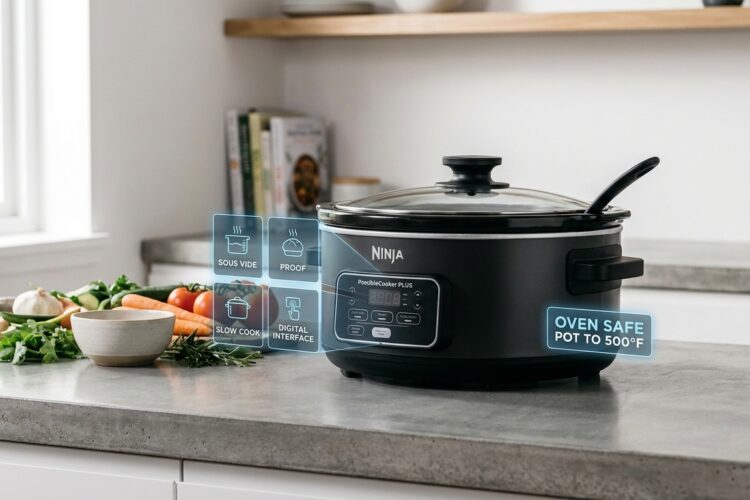
At its core, the PossibleCooker PLUS is a countertop multi-cooker built around an 8.5-quart nonstick pot that’s designed to move between the counter, the stovetop, and the oven. Ninja markets it as a 12-in-1 device, meaning it’s engineered to replace or supplement a range of separate appliances and cookware pieces, including a slow cooker, Dutch oven, sous vide setup, bread proofer, steamer, and searing pan, among other functions.
The defining feature that separates this from a typical slow cooker is the pot itself. Instead of a ceramic insert that can crack under sudden temperature changes or shatter if dropped, the PossibleCooker PLUS uses a metal pot with a nonstick coating that’s rated oven-safe up to 500°F. That means the same vessel you use to slow-cook a stew on the counter can, in theory, go straight into the oven to finish with a broiled or baked top, or transfer to a stovetop burner for searing meat before the low-and-slow cooking phase begins.
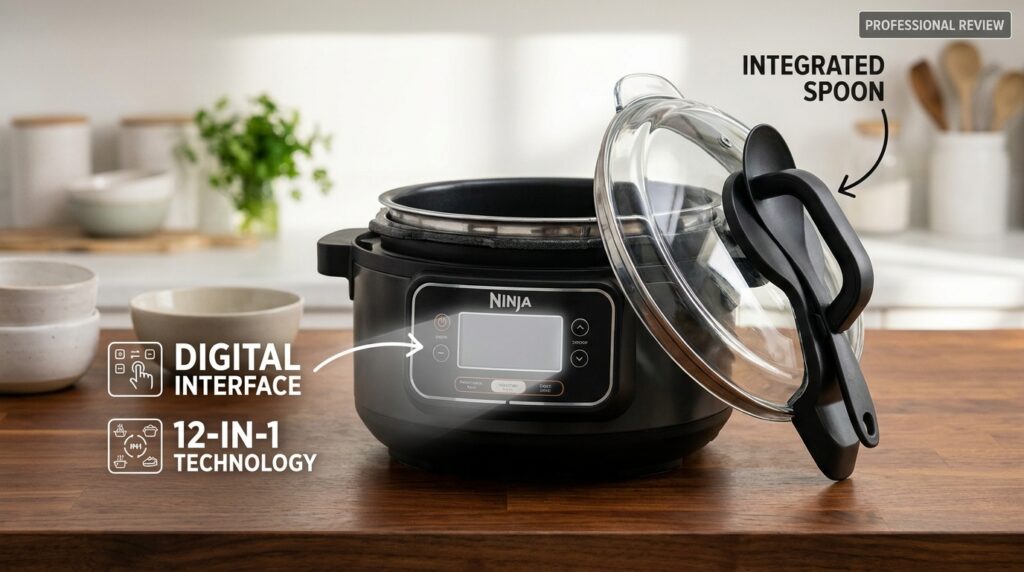
A glass lid lets you monitor food without lifting it and releasing heat, and an integrated spoon holder is built into the lid itself, a small but thoughtful detail for anyone who’s ever hunted for a stirring spoon covered in sauce.
Key Features Worth Knowing About
Multi-Surface Cooking Pot
The nonstick, oven-safe pot is arguably the headline feature. Traditional slow cooker inserts are typically ceramic or stoneware, which means they generally shouldn’t go on a stovetop burner or under a broiler. The PossibleCooker PLUS pot is designed to handle stovetop searing, oven roasting up to 500°F, and standard slow cooking, all in the same vessel. This reduces the number of pots and pans needed for a single recipe that might otherwise require browning meat in a skillet before transferring it to a slow cooker insert.
Sous Vide Function
Sous vide cooking, which involves cooking food in a precisely controlled water bath, has traditionally required a separate immersion circulator clipped to a pot of water. Built-in sous vide functionality on the PossibleCooker PLUS means the appliance can maintain the low, steady temperatures this technique requires without an additional gadget.
Proofing Setting
For home bakers, a dedicated proofing function offers a controlled, warm environment for bread dough to rise, which can be particularly useful in cooler climates or drafty kitchens where dough might rise unevenly or too slowly.
Slow Cooking and Dutch Oven Functions
The appliance covers the classic slow cooker use case, low and slow cooking over several hours, as well as Dutch oven style cooking, which typically involves braising, stewing, or baking at higher heat for shorter periods. Having both in a single unit is meant to address the fact that many households own both a slow cooker and a Dutch oven but use each only occasionally.
Additional Cooking Modes
Beyond the headline functions, the 12-in-1 designation reflects a broader set of presets that generally include options like steaming, searing, baking, and keeping food warm after cooking finishes. The exact preset menu and terminology may vary, so it’s worth checking the current product listing or manual for the full breakdown of available settings.
8.5-Quart Capacity
At 8.5 quarts, the pot sits in a size range suitable for feeding a family or preparing food for gatherings, while still being a single unit rather than requiring oversized cookware for every task.
Glass Lid with Integrated Spoon Holder
The tempered glass lid allows visual monitoring during cooking, and the built-in spoon rest is a practical touch aimed at reducing counter mess during multi-step cooking.
How It Can Be Used in a Real Kitchen
Understanding the feature list is one thing; picturing how those features translate into daily cooking is another. Here are some practical ways a multi-cooker like this might fit into a routine.
Weeknight braises and stews. A common pain point with slow cooking is that browning meat beforehand, which adds significant flavor, usually means dirtying a skillet first. Because the PossibleCooker PLUS pot can go on the stovetop, meat can be seared directly in the same vessel before switching to the slow cook setting, reducing both cleanup and the number of steps involved.
Oven-finished dishes. Some recipes benefit from a final blast of high, dry heat, think a crispy topping on a casserole or a caramelized crust on a baked pasta dish. Since the pot is oven-safe to 500°F, a dish could theoretically be slow-cooked for hours and then moved directly into the oven to finish, without transferring the food to a separate baking dish.
Batch cooking and meal prep. The 8.5-quart capacity lends itself to preparing larger quantities of soups, chilis, or grain-based dishes that can be portioned out over several days, which is a common strategy for people managing busy schedules.
Sous vide proteins. For those interested in sous vide cooking but hesitant to buy a dedicated immersion circulator, having the function built into an appliance they’d use anyway may lower the barrier to trying the technique for proteins like chicken breast, steak, or eggs.
Homemade bread and baked goods. The proofing setting could be useful for anyone experimenting with homemade bread, pizza dough, or other yeasted recipes where consistent warmth speeds up and evens out the rise.
Entertaining and holiday cooking. Larger gatherings often strain a kitchen’s cookware, especially when the oven and stovetop are both occupied with other dishes. A standalone multi-cooker can take on a side dish, a soup course, or a warming function for something like mulled cider, freeing up burner and oven space.
Who This Appliance May Be Suitable For
No kitchen appliance is universally right for everyone, and it’s worth thinking honestly about who tends to benefit most from a multi-function cooker like this one.
People with limited kitchen storage. Apartment dwellers, or anyone with a small kitchen, often have to make trade-offs about which appliances earn a permanent spot in their cabinets. Consolidating several functions into one unit can be appealing if storage space is at a premium.
Home cooks who already use slow cookers and Dutch ovens regularly. If braising, stewing, and slow cooking are already part of your routine, a unit designed to streamline those tasks and add a searing step may offer genuine convenience.
Cooking hobbyists curious about sous vide or proofing. Someone who has been curious about sous vide cooking or more serious bread baking, but hasn’t wanted to invest in separate specialized equipment, might find this a reasonable way to experiment.
Households that cook in bulk. Families, meal preppers, or anyone who regularly cooks for a crowd may appreciate the larger 8.5-quart capacity compared to smaller multi-cookers on the market.
People who value fewer dishes. Because the pot moves between stovetop, counter, and oven, some recipes can be completed with a single vessel, which may appeal to anyone who finds cleanup to be the least enjoyable part of cooking.
On the other hand, this may be less essential for someone who lives alone and cooks in small portions, has a fully equipped kitchen already, or strongly prefers using separate, specialized tools for each individual cooking method.
Important Things to Consider Before Purchasing
Counter space and storage. While the appliance replaces several other tools, it is still a fairly large single unit. Measuring your available counter and cabinet space beforehand is a sensible step, particularly in smaller kitchens.
Learning curve for new functions. If sous vide cooking or bread proofing are new to you, there will likely be a learning period as you get familiar with timing, temperatures, and technique, even with guided presets.
Care and maintenance. Nonstick cookware generally requires some care to preserve its coating over time, such as avoiding metal utensils and abrasive scouring pads. Checking the manufacturer’s care instructions can help the pot last longer.
Oven-safe limits. While the pot is rated safe to 500°F, it’s worth confirming which components (such as handles, lid, or any control elements) have separate heat limits, since not every part of an appliance is necessarily rated the same as the pot itself.
Power and electrical considerations. As with most countertop appliances of this size, checking wattage and outlet compatibility, especially if you plan to use an extension cord or a kitchen with limited outlets, is a practical step before purchase.
Comparing to your actual cooking habits. It’s worth being honest about which of the twelve functions you’d realistically use. An appliance with broad capabilities is only valuable if those capabilities align with how you actually cook.
How Multi-Cookers Compare to Traditional Single-Purpose Appliances
Rather than comparing specific brands, it’s useful to think about the broader category differences between multi-function cookers and traditional single-purpose kitchen tools.
Traditional slow cookers are typically simpler, often less expensive, and focused on one job. Their ceramic inserts are generally not designed for stovetop or high-heat oven use, which can limit flexibility for recipes that call for searing first.
Standalone Dutch ovens, often made of enameled cast iron, are prized for even heat retention and durability, and they can usually go from stovetop to oven without issue. However, they don’t offer automated temperature control, timers, or presets, so they require more hands-on attention throughout cooking.
Dedicated sous vide immersion circulators are typically compact and precise, clipping onto any large pot of water. They can offer very fine temperature control but require a separate container and don’t handle other cooking tasks.
Multi-function cookers, like the PossibleCooker PLUS, aim to bridge these categories by combining automated presets with a pot designed for more varied heat exposure. The trade-off is generally that a multi-function device may not match the specialized performance of a dedicated tool in every single category, but it can reduce the total number of appliances and dishes needed for a given meal.
Choosing between these categories often comes down to whether you value specialization and simplicity, or flexibility and consolidation, more.
Frequently Asked Questions
Does the pot need to be removed from the base unit to go in the oven? Generally, multi-cookers with oven-safe pots are designed so the pot itself, not the electric base, is the part rated for oven use. It’s important to separate the pot from its electrical base before placing it in the oven, and to always check the specific instructions provided with the unit.
Can this replace a dedicated sous vide immersion circulator entirely? For many home cooking purposes, a built-in sous vide function can handle common tasks like cooking proteins to a precise temperature. However, dedicated sous vide devices may offer more precise or specialized controls for advanced techniques, so the right choice depends on how serious your sous vide interests are.
Is the nonstick coating safe for long-term use? Nonstick coatings vary by manufacturer and materials used. Following the specific care instructions, such as avoiding metal utensils and extreme heat exposure beyond rated limits, generally helps maintain the coating’s performance and lifespan over time.
How does cleaning work with a pot this size? Most nonstick, oven-safe multi-cooker pots are designed to be relatively easy to wipe down after cooking, though checking whether the specific pot is dishwasher-safe or requires hand washing is worth doing before your first use.
Is 8.5 quarts too large for a smaller household? Capacity needs depend heavily on cooking habits. An 8.5-quart pot offers flexibility for larger batches, but it can generally still be used for smaller portions as well, though very small households might find a compact multi-cooker better suited to their everyday needs.
Does the proofing function work for all types of bread dough? Proofing settings are generally designed to provide a consistent warm environment suitable for most yeasted doughs. However, specific bread recipes may have their own ideal proofing conditions, so it’s worth cross-referencing your recipe’s instructions with the appliance’s guidance.
Final Thoughts
The Ninja 12-in-1 PossibleCooker PLUS represents a broader trend in kitchen appliances: consolidation. Rather than owning a slow cooker, a Dutch oven, a sous vide circulator, and a proofing box separately, this unit attempts to combine those functions into a single, oven-safe pot with a countertop base. For cooks who value flexibility, are working with limited kitchen space, or are curious about branching into techniques like sous vide cooking or bread proofing without buying separate equipment, this kind of multi-function approach can offer real practical value.
At the same time, it’s not a universal solution. Cooks who already have a full set of specialized tools they’re happy with, or who only use one or two of these functions regularly, may not need the full range of capabilities this appliance offers. As with most kitchen purchases, the right decision comes down to an honest look at your own cooking habits, available space, and how much you value having fewer appliances doing more jobs.