Introduction
Slow cookers have become staple kitchen appliances for households across the country, offering convenience and the promise of home-cooked meals with minimal hands-on effort. However, not all slow cookers are created equal. While the typical household models hold around 4 to 6 quarts, there’s an entirely different category of cooking equipment designed for larger needs. The 8-quart capacity slow cooker represents a significant step up from standard models, opening possibilities that extend well beyond the typical weeknight dinner scenario.
This guide explores what it means to cook with an 8-quart slow cooker, examining the practical realities of this category of appliance. Whether you’re considering this size for family gatherings, entertaining guests, or simply preparing meals that stretch across multiple meals, understanding the capabilities and limitations of these larger units is essential before making an investment.
Understanding Large-Capacity Slow Cookers
Before diving into the specifics of any single model, it’s worth understanding where the 8-quart slow cooker sits in the broader landscape of slow cooking appliances. The standard household slow cooker typically ranges from 3 to 6 quarts, suitable for families of four to six people preparing dinner for one evening. An 8-quart model, on the other hand, fundamentally changes the equation.
The mathematics of capacity seem straightforward on paper, but the practical implications deserve deeper consideration. An 8-quart capacity theoretically serves 10 or more people, depending on portion sizes and what else appears on the table. However, capacity isn’t simply about volume—it’s about how efficiently heat distributes through larger quantities of food, how thoroughly ingredients meld together, and how the cooking time may need adjustment compared to smaller batches.
Larger slow cookers exist in a unique space. They’re too big for everyday single-family dinners but invaluable for specific scenarios. Understanding where they fit helps clarify whether this size makes sense for your particular situation.
Key Features and Specifications
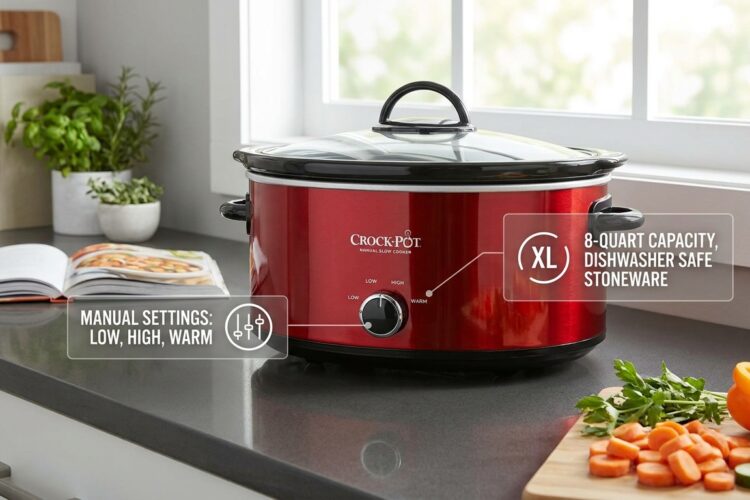
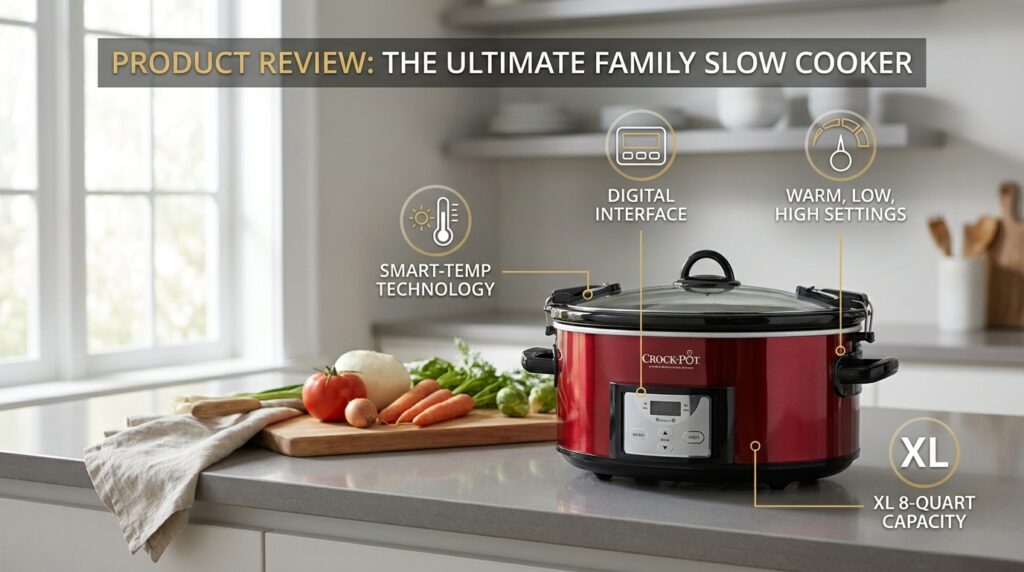
The 8-quart manual slow cooker in red (this particular model) includes several characteristics worth examining individually:
Removable Stoneware Insert
The stoneware insert is the business end of any slow cooker. Made from ceramic material, this component directly contacts the food and experiences regular temperature fluctuations. Stoneware offers several advantages in slow cooking applications. It heats gradually and retains heat effectively, contributing to even cooking throughout the pot. Unlike metal or glass, stoneware doesn’t conduct heat with the same intensity, which helps prevent scorching of delicate foods positioned near the walls of the pot.
The removable design serves multiple functions. It allows for easier cleaning, which becomes genuinely important with an 8-quart capacity—hand-washing a large pot is considerably different from washing a small one. The ability to remove the stoneware also permits transfer of the pot to the table for serving, which is both practical and presentations-wise more appealing than serving directly from the heating base.
Manual Control Setting
This particular model features manual controls rather than digital programming. While digital models offer programmable timers and multiple heat settings, manual controls provide their own advantages. They’re typically more straightforward to operate, less susceptible to electronic failure, and often simpler to repair if something goes wrong. For users who are home during the cooking process or who plan their slow-cooked meals in advance, manual controls present no significant limitation.
The heating mechanism typically includes settings for low, high, and often a warming setting—the third feature worth noting on this model.
Warming Setting
The warming setting on a slow cooker serves an important function that extends beyond simply keeping food warm. Once cooking completes, the warming setting maintains the food at a safe temperature without continuing to cook it. This becomes particularly valuable when meal timing is uncertain or when you’re entertaining and want the flexibility of keeping food ready without it deteriorating from overcooking.
For large family gatherings or events where people arrive at staggered times, this feature proves genuinely useful. The difference between food that’s been sitting at temperature for thirty minutes versus two hours can be significant, and the warming setting helps bridge that gap more gracefully than leaving things on high heat.
Dishwasher-Safe Components
The specification that the stoneware is dishwasher-safe matters more for an 8-quart model than for smaller options. Hand-washing a large pot takes considerable effort and time. The ability to place stoneware in a dishwasher simplifies the cleanup process substantially, which shouldn’t be underestimated as a practical consideration for regular use.
Capacity and Serving Size
The 8-quart capacity translates to approximately 30 cups of liquid or food volume. The claim of serving 10+ people assumes roughly 3-cup servings, which is reasonable for a hearty stew, chili, or similar dishes, but may be smaller or larger depending on the specific recipe and what accompanies the main dish.
Practical Applications and Recipes
The most straightforward way to understand where an 8-quart slow cooker finds its purpose is through examining how it might actually be used. This isn’t theoretical—these applications represent how people genuinely employ this category of appliance.
Large Family Meals and Batch Cooking
The most obvious application is preparing substantial meals for families larger than what standard slow cookers accommodate. A recipe that might serve 6 people in a 6-quart cooker could be doubled in an 8-quart model. This opens the possibility of making meals large enough for two dinners or for leftovers that can be frozen and consumed later.
Dishes particularly well-suited to large slow cooker preparation include chili, stews, pulled pork for sandwiches, curries, and braised dishes where long, slow cooking develops flavor while keeping the hands-on cooking time minimal. For families with teenagers and hearty appetites or households where multiple people consistently eat together, the ability to prepare these quantities at once provides genuine convenience.
Entertaining and Gatherings
Beyond regular family meals, the 8-quart capacity becomes especially valuable when entertaining. Preparing meatballs, pulled chicken, hot dip, or other appetizers in a slow cooker keeps them warm throughout the evening while freeing up stovetop and oven space for other preparations. A single large slow cooker can handle quantities that would require multiple smaller cookers or constant stovetop attention.
Holiday dinners, potlucks, and community events are scenarios where these larger units shine. Instead of managing multiple appliances or worrying about keeping foods at proper temperature, one 8-quart slow cooker can be the centerpiece of a substantial contribution to a gathering.
Recipe Ideas Suited to 8-Quart Capacity
Several categories of recipes work particularly well in larger slow cookers. Soups and broths represent an obvious category—the 8-quart capacity is substantial for making large batches of minestrone, chicken soup, or bone broth that can be portioned and frozen. Chili, whether traditional beef-based, turkey, or vegetarian versions, scales well and benefits from the long cooking time that slow cookers provide.
Pulled meats for sandwiches represent another category where capacity becomes valuable. A slow cooker can process whole pork shoulders or multiple chicken breasts, creating shredded meat that serves numerous people. Similarly, curry dishes, jambalaya, and other one-pot meals from various cuisines adapt well to slow cooking at scale.
Breakfast dishes present an underexploited possibility with large slow cookers. Breakfast casseroles, oatmeal, or breakfast burritos can be prepared overnight and be ready for early morning serving, useful for overnight guests or family reunions where synchronized meal timing helps.
Who Might Benefit From an 8-Quart Slow Cooker
The suitability of an 8-quart slow cooker isn’t universal—it depends significantly on individual circumstances and cooking patterns.
Large Households
The most straightforward fit is a household with six or more people who regularly eat together. Parents with multiple teenage children, multi-generational households where grandparents live with adult children and grandchildren, or similar situations represent natural users for this capacity. The cost per serving, when amortized across multiple people, becomes economical.
Frequent Entertainers
People who regularly host gatherings, whether informal dinner parties or larger celebrations, may find an 8-quart slow cooker indispensable. The ability to contribute a fully prepared hot dish to a potluck or to keep appetizers warm during a party reduces stress and frees up cooking space.
Batch Cooks and Freezer Enthusiasts
The growing practice of batch cooking—preparing multiple meals at once and freezing portions for later consumption—aligns well with an 8-quart capacity. Someone committed to this cooking method can make multiple recipes, or large quantities of a single recipe, using the freezer strategically to reduce cooking frequency.
Community Organizations and Fundraisers
Churches, schools, sports organizations, and community groups sometimes maintain slow cookers for events. An 8-quart capacity streamlines logistics for these applications, reducing the number of appliances needed and simplifying temperature management.
Specific Dietary or Cultural Traditions
Some cuisines or dietary approaches benefit from large-quantity slow cooking. Making bone broth, preparing for specific religious holidays, or accommodating gluten-free or other dietary requirements often involves cooking substantial quantities, making the larger capacity economical.
Important Considerations Before Purchasing
Capacity isn’t the only factor that determines whether an 8-quart slow cooker makes sense. Several practical considerations deserve attention.
Space Requirements
An 8-quart slow cooker occupies significantly more countertop and storage space than standard models. The footprint is substantially larger, which matters for kitchens already dealing with limited counter space. Storage represents another consideration—a large slow cooker requires cabinet or pantry space appropriate to its dimensions.
Power Consumption
Larger slow cookers draw more electrical power than smaller models. Most standard outlets handle this without difficulty, but it’s worth noting if you’re planning to use it in older homes or situations where electrical capacity might be limited. The heating element needs to maintain temperature across larger volumes of food, requiring more power.
Cooking Time Adjustments
While slow cookers operate on straightforward principles, cooking times don’t scale linearly. A recipe that might cook for 6 hours in a 6-quart model might require 7 or 8 hours in an 8-quart cooker, particularly if the total volume is substantially increased. Temperature distribution takes longer across larger quantities, and the increased thermal mass means adjustments may be necessary.
Filling and Emptying
Practically speaking, filling a large stoneware pot with ingredients and emptying it to serve requires more effort than working with smaller models. Carrying an 8-quart filled pot of hot liquid or food requires caution and strength. For people with mobility considerations or for household situations where physical assistance isn’t readily available, this deserves thought.
Frequency of Use
An 8-quart slow cooker makes greatest sense for people who use slow cookers regularly enough to justify the storage space and initial investment. For occasional users, a standard-sized model or even borrowing a larger cooker when needed might be more practical.
Manual Versus Digital Controls
The choice between manual and digital controls represents a meaningful decision point. Manual controls, as featured on this model, are simpler and more durable but require planning—you can’t set it to turn on in the afternoon if you’re away in the morning. Digital controls add complexity and potential points of failure but offer flexibility. Your cooking habits should inform this preference.
How This Compares to Other Large Slow Cooker Options
The market includes several options in the large slow cooker category. Understanding how different models compare helps contextualize any individual product.
6-Quart versus 8-Quart Models
The jump from 6 to 8 quarts represents a 33% increase in capacity. That said, the practical difference isn’t always as dramatic as the percentage suggests. A 6-quart model often serves a family of six adequately, and for many households, the additional 2 quarts don’t translate into significant added value. The cost difference between sizes and the space implications mean that for smaller households, the 6-quart option remains sensible.
Manual Versus Programmable Large Cookers
Some larger slow cookers feature digital controls and programmable timers, while others employ straightforward manual settings. Manual controls typically cost less and offer fewer potential failure points. Programmable models offer convenience for people who want to delay the start time or have precise temperature control based on elapsed time. The choice depends on whether the added features justify the additional complexity and expense for your specific use case.
Stoneware Versus Ceramic Inserts
Most large slow cookers use some form of ceramic material for the cooking vessel. Minor variations in thickness and thermal conductivity exist between products, but these differences rarely make a dramatic practical impact for home cooks. The removable stoneware feature present on this model is genuinely convenient for cleaning and serving.
Brand Considerations
Several established manufacturers produce large slow cookers, and brand reputation, warranty coverage, and availability of replacement parts all factor into the comparison. Established brands often offer better parts availability if something eventually needs replacement, which matters for an appliance you might use for years.
Maintenance and Care
Proper care extends the lifespan and maintains the functionality of a slow cooker, particularly one large enough to represent a genuine investment.
Cleaning the Stoneware
The removable stoneware should be hand-washed or placed in the dishwasher according to manufacturer recommendations. Even dishwasher-safe stoneware benefits from hand-washing if significant food has hardened on surfaces—this prevents potential damage from abrasive dishwasher action. For stubborn spots, soaking in warm soapy water before washing typically resolves issues.
Caring for the Heating Base
The electrical base should never be submerged in water. A damp cloth removes spills or splatters. Ensure the unit is unplugged before cleaning the exterior. Keep the heating element clear of debris and ensure adequate ventilation around the base during operation.
Storage Considerations
When storing a large slow cooker, ensure it’s clean and completely dry. Store in a location where it won’t be knocked over and where the power cord isn’t at risk of damage. Some people prefer to store the stoneware separately from the heating base to reduce overall storage footprint.
Handling Temperature Extremes
Stoneware can crack if subjected to extreme temperature changes. Never place a cold stoneware insert directly into a preheated base, and avoid placing the hot stoneware on cold surfaces. This precaution prevents thermal shock that could damage the ceramic material.
Frequently Asked Questions
How much does an 8-quart slow cooker cost to operate?
The electricity cost depends on your local rates and how frequently you use it, but most slow cookers cost just a few cents per hour to operate. The extended cooking time and gentle heat make them relatively efficient compared to using an oven for the same duration.
Can you cook smaller portions in an 8-quart slow cooker?
Yes, though recipes designed for smaller cookers may cook faster in a larger unit with the same relative fill level. You can cook smaller quantities, but filling the cooker to at least one-third capacity helps with even cooking and prevents food from drying out.
Is an 8-quart slow cooker heavy?
Yes, particularly when filled with food. When empty, the unit typically weighs 10-15 pounds depending on the exact model. When filled with 8 quarts of liquid or stew, the weight increases substantially—easily to 40+ pounds. This affects where you can safely place it and who can safely carry it.
How long does food stay warm on the warming setting?
The warming setting maintains food above safe temperature (above 140°F) but shouldn’t be relied upon as an indefinite holding method. Most food maintains acceptable quality for 2-3 hours on warming; beyond that, quality degrades. The warming setting works best for shorter holding periods.
Can the stoneware go in the oven?
This depends on the specific product design. Some stoneware is oven-safe while others aren’t. Check manufacturer documentation before attempting oven use. Using stoneware both in a slow cooker and in an oven isn’t necessary for most cooking and isn’t recommended unless explicitly approved.
What’s the difference between low and high settings?
Low and high settings control the wattage delivered to the heating element. High heats the contents more quickly and reaches serving temperature faster. Low cooks more gently and is typically recommended for longer cooking times that develop flavor through extended exposure to moderate heat. Most recipes specify which setting to use.
Is it normal for slow cookers to have variation in temperature?
Yes, particularly with manual controls. Slow cookers aren’t thermostats that maintain precise temperatures—they fluctuate within ranges. This is normal and expected. Food safety depends on reaching and maintaining temperatures above 140°F, which slow cookers accomplish even with natural variation.
Can you put a slow cooker on a timer?
Manual slow cookers don’t have built-in timers, so using a separate outlet timer or kitchen timer helps manage cooking duration. This works effectively for predetermined cooking times. If your schedule is unpredictable, a programmable model might be more suitable.
Does stoneware ever need replacement?
Stoneware is durable but not indestructible. Cracks, chips, or thermal shock damage occasionally occur. Some manufacturers sell replacement stoneware inserts separately, while for others you might need to purchase a new base-and-stoneware combination. Checking replacement part availability before purchasing is practical for long-term value consideration.
How do you know when food is done in a slow cooker?
This depends on the specific recipe. Most recipes provide visual or texture cues—when a roast shreds easily with a fork, when beans are tender, when rice is fully absorbed. For food safety purposes, meat should reach safe internal temperatures as measured with a thermometer. Slow cookers are generally forgiving and difficult to undercook, particularly on low settings.