Introduction
The slow cooker has become a staple in many kitchens over the past few decades, and for good reason. The appeal is straightforward: add your ingredients in the morning, let time and gentle heat do the work, and you have a ready meal by evening. However, the traditional slow cooker has a limitation that affects a growing segment of home cooks—it’s essentially a countertop appliance that doesn’t travel well.
This is where portable slow cookers enter the conversation. The Hamilton Beach Stay or Go Extra Large (Model 33195G) represents a particular approach to solving this problem: combining the substantial capacity that feeds larger families or gatherings with the portability that modern lifestyles demand. Whether you’re planning a potluck, attending a family reunion, tailgating at a sporting event, or simply want the flexibility to cook in different locations, understanding what this appliance offers can help you determine whether it aligns with your needs.
This guide explores the Hamilton Beach model in detail, examining its features, practical applications, and the considerations that matter when choosing a portable slow cooker at this size and price point.
Understanding Portable Slow Cookers
Before diving into the specifics of the Hamilton Beach Stay or Go, it’s helpful to understand what distinguishes portable slow cookers from their stationary counterparts. While traditional slow cookers are designed to sit permanently on your counter, portable models incorporate design elements that make them viable for transport. This might include sturdy handles, secure lids, and construction that withstands movement without spills or damage.
The trade-offs typically involve durability, heating efficiency, and ease of use. A portable model may not have the same level of insulation as a built-in kitchen appliance, and the engineering must account for the stresses of being moved and transported. Understanding these differences helps set realistic expectations for performance.
Key Features of the Hamilton Beach Stay or Go Extra Large
Impressive Capacity
The 10-quart capacity positions this model in the upper range of slow cooker sizes. To put this in perspective, most standard household slow cookers range from 4 to 6 quarts. A 10-quart model can accommodate entire chickens, large roasts, or quantities suitable for feeding 15 to 20 people. This size makes it particularly relevant for those who regularly cook for larger groups, batch cook for meal preparation, or need something substantial for social gatherings.
The capacity advantage comes with practical considerations. A 10-quart slow cooker takes up more space during transport and storage. It’s heavier when full, requiring more careful handling. However, for those cooking scenarios where size matters, the trade-off often makes sense.
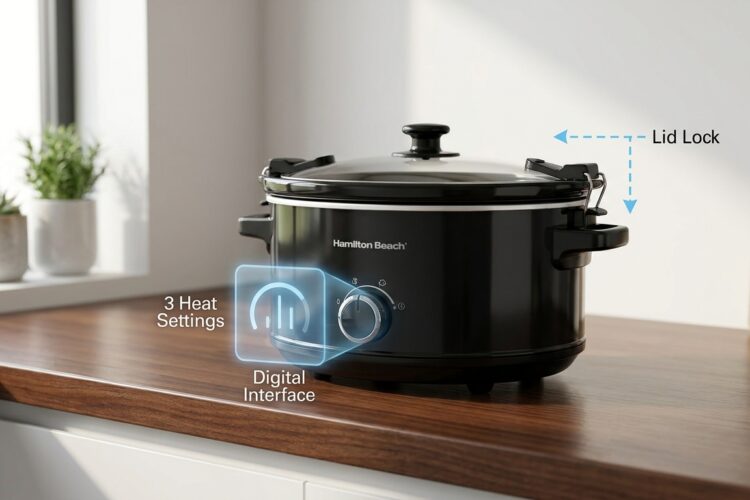
Three Heat Settings
The model includes three heat settings, which is a standard configuration in the slow cooker market. These typically include low, high, and in this case, a third option that might be medium or a warming setting. Three settings provide flexibility for different recipes and cooking times without the complexity of continuous temperature adjustment.
Low heat settings generally cook food slowly over 8 to 10 hours, making them ideal for tougher cuts of meat that benefit from extended cooking time. High settings reduce cooking time to 4 to 6 hours, useful when you’re working with a tighter schedule. A third setting offers additional flexibility for recipes that fall between these extremes or for keeping food warm during service.
Having multiple settings prevents the common issue of food becoming overcooked, which can happen if a single-setting slow cooker runs too long.
Lid Lock Mechanism for Travel
One of the defining features of a portable slow cooker is how effectively it prevents spills during transport. The Hamilton Beach Stay or Go includes a lid lock mechanism specifically designed to secure the lid tightly, reducing the risk of contents spilling during movement.
This feature matters more than it might initially seem. A locked lid allows you to transport the cooker while still containing the food, which is essential when you’re moving it from kitchen to car to event location. Without a secure lid, even minor tilting or bumpy roads could result in slow cooker contents ending up on vehicle upholstery.
The effectiveness of a lid lock contributes directly to the practical usability of the appliance. It’s the difference between a slow cooker that theoretically could travel and one that actually works as a reliable travel companion.
Stoneware Crock and Glass Lid
The cooking vessel is made from stoneware, which is a common material for slow cookers. Stoneware distributes heat evenly and retains temperature well, both important for consistent cooking results. The material is also durable and resistant to cracking under normal use.
The glass lid serves multiple purposes. Visually, it allows you to monitor food without lifting the lid and disrupting the cooking environment. Thermally, glass provides a transparent barrier that contributes to heat retention while allowing you to observe the cooking process. Unlike opaque plastic alternatives, glass is also more durable and less likely to become scratched or discolored over time.
The combination of stoneware and glass is a traditional approach to slow cooker construction, chosen because these materials have proven effective through years of widespread use.
Dishwasher-Safe Components
The stoneware crock and glass lid are dishwasher-safe, which simplifies cleanup. This is a practical consideration if you use the slow cooker frequently. Hand-washing large cooking vessels takes time and effort, and having the main components be dishwasher-compatible makes the appliance more convenient for regular use.
It’s worth noting that the heating base unit itself cannot go into the dishwasher and requires hand-washing, which is typical for electrical appliances. However, since the heating base is smaller and simply needs to be wiped down, the majority of your cleanup involves the larger components that can go directly into the dishwasher.
Compact Black Design
The black exterior color is practical because it doesn’t show stains as easily as lighter colors. It’s a neutral aesthetic choice that coordinates with most kitchen designs and event settings. The color is a minor point but worth mentioning because appearance influences how a kitchen appliance feels in a space, whether it’s your own kitchen or being transported to an event.
How the Hamilton Beach Stay or Go Can Be Used
Everyday Family Cooking
Many people use large portable slow cookers as their primary cooking method rather than reserving them for special occasions. A 10-quart model can handle a full week’s worth of meals if you cook in batches. Prepare a pot of chili, divide it into containers, and you have lunch options throughout the week.
This application appeals to busy professionals, parents managing multiple schedules, or anyone who benefits from having prepared meals available. The slow cooker handles tougher, less expensive cuts of meat beautifully, transforming inexpensive ingredients into tender, flavorful dishes.
Family Gatherings and Potlucks
The capacity makes this model particularly suitable for contributing a substantial dish to communal meals. If you’re responsible for feeding part of a family gathering, a 10-quart slow cooker can handle the volume without needing backup. This eliminates the stress of hoping there’s enough food or needing to make multiple trips.
The portability means you can keep the food at serving temperature during the event. Setting up in a corner of your host’s kitchen or event space, the slow cooker maintains your contribution at the right temperature without taking up much active space.
Outdoor Events and Entertaining
Tailgates, backyard parties, camping trips, and outdoor weddings all benefit from having a large, easily transported heat source for food. The lid lock ensures you can travel safely with hot food, and the capacity means you’re not constantly refilling a small cooker.
For outdoor entertaining, having a slow cooker reduces the complexity of meal preparation. You can slow-cook food before the event and then transport it, keeping it warm throughout the gathering. This approach is simpler and often safer than trying to cook on-site with open flames or portable grills.
Catering and Small-Scale Food Service
If you cater small events or run a home-based food business, large-capacity slow cookers become operational tools. A 10-quart model helps meet volume requirements without needing expensive commercial equipment. Multiple models can be coordinated to serve different dishes for a single event.
People who cook for food banks, community events, or other volunteer cooking situations sometimes maintain large portable slow cookers specifically for these purposes. The appliance becomes infrastructure for their charitable or community work.
Holiday Preparation
Holidays involve cooking larger quantities than everyday meals. Whether you’re preparing side dishes for Thanksgiving, chili for a Super Bowl party, or a full dish for a holiday buffet, a large slow cooker handles the volume while freeing up your oven and stovetop for other components of your meal.
The ability to cook this food a day or two early, then transport it to the actual event location, reduces stress during holiday preparation. You’re not trying to time multiple dishes to be ready simultaneously while managing guests.
Who May Find This Model Suitable
Larger Families
Households with five or more people can benefit from the capacity. Rather than filling two standard slow cookers, one extra-large model handles the volume while taking up less total kitchen space.
Frequent Entertainers
If you regularly host gatherings, contribute to potlucks, or attend events where you bring food, a large portable slow cooker is a practical investment. The cost per use decreases significantly over time if you use it regularly.
Meal Prep Enthusiasts
People who dedicate a day to preparing meals for the upcoming week find large slow cookers valuable. The volume allows preparing multiple portions at once, reducing total cooking time and energy use.
Event Planners and Caterers
Those who manage events, whether professionally or for community organizations, benefit from having a large, portable heating vessel that maintains food temperature reliably.
Outdoor Lifestyle Advocates
Camping, tailgating, RV travel, and outdoor entertaining all become easier with a portable slow cooker. The appliance adds versatility to outdoor activities by enabling warm meal options beyond simple grilling.
People with Limited Cooking Skills
Slow cooking is forgiving. You add ingredients, set the temperature, and return later. The long cooking time means minor timing mistakes don’t result in burnt or undercooked food. For people who find cooking intimidating or stressful, slow cookers reduce complexity.
Important Considerations Before Purchasing
Space Requirements
A 10-quart slow cooker is substantial. When filled, it’s heavy. When not in use, it requires storage space. If your kitchen or storage areas are limited, you need to identify a realistic location for the appliance. Some people store slow cookers in garages or pantries rather than on kitchen counters.
Frequency of Use
The question of whether a large slow cooker makes sense depends partly on how often you’d actually use it. If you entertain once or twice a year, the storage footprint might not justify the appliance. If you use it multiple times weekly or monthly, the math becomes more favorable.
Transportation Logistics
While the lid lock prevents spills, you still need to physically transport a 10-quart slow cooker. When filled, it weighs 15-20 pounds depending on contents. Getting it in and out of vehicles, up stairs, or through narrow doorways requires planning. Some people use a dedicated transport container or bag to make moving the appliance easier.
Heating Performance
Portable slow cookers, by their nature, may not maintain temperature as effectively as stationary models. The greater surface area relative to insulation means heat loss occurs more readily. This rarely impacts cooking results significantly, but food left warming for extended periods might cool more quickly than you’d expect.
Learning Your Model
Every slow cooker has thermal characteristics and hot spots. Some run hotter than others; some heat more evenly. With frequent use, you learn whether your specific model’s low setting truly cooks as slowly as expected, or whether you need to adjust recipes accordingly. The first few uses involve some experimentation.
Recipes and Food Safety
Not everything works equally well in a slow cooker. Dairy products can separate, delicate fish can become mushy, and certain thickened sauces may break. Learning which recipes succeed in slow cookers is part of developing proficiency with the appliance.
Food safety matters as well. Food needs to reach safe internal temperatures, and slow cookers should never be used for dishes that require high-temperature searing or browning before slow cooking, unless you’ve provided that preparation separately.
How Large Portable Slow Cookers Fit in the Market
The slow cooker market includes several categories. Standard slow cookers range from 4 to 6 quarts and suit typical household cooking. They’re the most common type because they align with cooking for standard family sizes. These models are widely available and relatively inexpensive.
Large stationary slow cookers, also 8 to 10 quarts, exist for people who want extra capacity but don’t prioritize portability. These are built with better insulation and heat distribution because they’re designed to stay in one place. They may be more efficient but offer no portability advantage.
Portable slow cookers incorporate design elements that sacrifice some thermal efficiency for the sake of being transportable. The Hamilton Beach Stay or Go line specifically addresses the market segment of people who want both portability and substantial capacity.
Within the portable category, models range from standard 4-6 quart sizes (the most portable and lightweight) to extra-large 10-quart options. The 10-quart portable represents the outer boundary of what most people consider practical to transport regularly. Larger options exist but become unwieldy for most consumers.
The Hamilton Beach Stay or Go Extra Large occupies a specific niche: you’re prioritizing capacity and portability over premium insulation or advanced features. It’s not the most feature-rich slow cooker available, nor is it the least expensive option in the market. It’s a practical middle-ground choice for people with specific needs around transporting larger quantities of food.
Frequently Asked Questions
How long does food typically cook in the different settings?
Low settings generally require 8 to 10 hours, while high settings typically cook food in 4 to 6 hours. The third setting, if it’s medium, would fall somewhere in between. Actual times vary based on the quantity of food, ingredients, and how tightly packed the slow cooker is. Dense meats take longer than vegetables, for example. Many recipes include timing guidelines that you can adjust based on your specific model’s performance.
Can I use the slow cooker for baking or non-savory dishes?
Slow cookers work for some desserts and baked goods, though results vary. Brownies, cheesecakes, and bread puddings are sometimes prepared in slow cookers, with the appliance essentially functioning as a low-temperature oven. Dairy-based desserts require care to prevent separation. It’s worth experimenting cautiously before committing to a large batch of a new recipe.
What’s the difference between the three heat settings, and how do I know which to use?
Low heat cooks slowly, breaking down tough fibers in meat and developing deep flavors. It’s ideal for less expensive, tougher cuts and for recipes where you have all day. High heat cooks faster, suitable when you’re short on time or using more tender ingredients. A third setting offers flexibility for recipes that fall between these extremes. Most recipes specify which setting to use, though experimentation teaches you your specific model’s characteristics.
How should I clean the slow cooker?
The stoneware crock and glass lid go directly into the dishwasher if you have one. The heating base shouldn’t be submerged but can be wiped with a damp cloth. Food doesn’t typically stick to stoneware, making cleanup straightforward. For stubborn spots, allowing the crock to soak briefly before washing helps.
Can I refrigerate the crock after cooking, or should I transfer food to other containers?
The stoneware crock is typically safe to refrigerate, making it convenient to cook in the evening and refrigerate the crock with leftovers overnight. However, check your specific model’s instructions, as recommendations can vary. Refrigerating food in the original cooking vessel saves on cleanup and container consumption.
Is it really safe to transport food in a hot slow cooker?
Yes, with the lid lock secure. The lid lock mechanism prevents the lid from shifting, which prevents spills and maintains the seal that keeps food hot during transport. The external base may become warm, so avoiding direct contact with upholstery or skin is wise. Many people place the slow cooker in a stable location within a vehicle to prevent tipping.
What types of recipes work best in a large slow cooker?
Soups, stews, chilis, pulled meats, and braised dishes are slow cooker favorites. Tougher, less expensive cuts of meat become tender and flavorful. Vegetables develop deeper flavors. One-pot meals where all components cook together are ideal. Recipes that require multiple cooking temperatures or very quick cooking don’t translate as well.
How much food can I realistically fit in a 10-quart model?
The 10-quart capacity means roughly 2.5 gallons of food. For practical purposes, most recipes suggest filling the slow cooker between half and two-thirds full for optimal cooking. A 10-quart model at full capacity can serve 15-20 people for one course, or 8-10 people as a single main dish with sides.
Does a larger slow cooker use significantly more electricity?
Larger slow cookers do use more energy than smaller models because they’re heating more food for longer periods. However, slow cookers are among the most energy-efficient cooking appliances, using less electricity than an oven. The difference between a standard and large slow cooker is noticeable but not dramatic.
Can I use this slow cooker as my primary cooking method?
Yes, many people do exactly this. Slow cookers handle batch cooking well, and having meals prepared ahead simplifies daily life. Some people cook with a slow cooker several times weekly. It’s a valid primary cooking method if it aligns with your schedule and preferences.
Conclusion
The Hamilton Beach Stay or Go Extra Large Portable Slow Cooker represents a thoughtful approach to solving a real problem: cooking food in large quantities for events, gatherings, or meal preparation while retaining the ability to move the appliance to different locations. The 10-quart capacity puts it in a category by itself for anyone who regularly needs to cook for groups larger than a typical household.
Like any kitchen appliance, whether this model makes sense depends on your specific cooking habits, entertaining frequency, and available space. It’s not the right choice for everyone, but for people who entertain regularly, cook for large families, or meal prep in batches, a large portable slow cooker offers practical value that compounds with every use.
The features are straightforward and functional: sufficient capacity, adequate temperature control, secure travel design, and easy-to-clean materials. Nothing about the model is particularly exotic or cutting-edge. Instead, it represents solid execution of the portable slow cooker concept at a larger size than most manufacturers offer.
Understanding slow cooker cooking—which recipes work, how to store cooked food, temperature safety—is as important as understanding the appliance itself. The slow cooker amplifies your cooking capabilities rather than replacing traditional cooking methods entirely. It excels in specific scenarios while other cooking methods remain superior for different applications.